


Views: 0 Author: Site Editor Publish Time: 2026-11-11 Origin: Site


As regulatory standards for electromagnetic compatibility tighten globally across automotive, aerospace, and high-frequency electronics, relying on third-party testing facilities creates bottlenecks in product development. Transitioning to in-house testing requires significant capital expenditure. Navigating the global wholesale market for an EMC Test System is complicated by opaque equipment tiers, fragmented supplier ecosystems, and the risk of under-specifying hardware for future compliance standards like FCC, CE, CISPR, and MIL-STD. This guide provides a technical and operational framework for evaluating wholesale equipment. We detail specialized automotive testing configurations and outline strategies for mitigating implementation risks during facility integration. Engineering teams and procurement officers can use this framework to align capital investments with long-term product roadmaps and regulatory requirements.
ROI Justification: Outsourced EMC testing costs justify the capital investment of an in-house system for high-volume manufacturers, typically yielding a 24- to 36-month payback period.
System Modularity is Critical: Procurement must account for "as-sold" versus "as-used" testing states, requiring modular systems that can adapt to evolving product form factors and future regulatory shifts.
Automotive Complexity Drives Cost: Specialized integrations, such as an EMC Chassis Dynamometer System or an EMC E-motor Test Bench, significantly increase baseline wholesale costs due to the need for heavy-duty shielding and active load management.
Hidden Implementation Factors: Upfront wholesale pricing rarely includes the full cost of facility retrofitting, specialized grounding, annual calibration, Device Under Test (DUT) preparation infrastructure, and proprietary software licensing.
The decision to bring electromagnetic compatibility testing in-house hinges on evaluating historical third-party laboratory expenditures against projected operational efficiency. External laboratories charge premium rates for specialized procedures like Radiated Susceptibility and Radiated Emissions. When a product fails a compliance test, your engineering team must return to the lab, modify the prototype, and re-book testing slots. This iterative cycle extends time-to-market and inflates development budgets. Establishing an in-house facility eliminates these scheduling bottlenecks. You can test prototypes continuously during the design phase without waiting for external availability.
Organizations must determine whether operational goals require a pre-compliance troubleshooting setup or a fully accredited compliance chamber. Pre-compliance systems utilize near-field probes, TEM cells, and basic spectrum analyzers to identify emission spikes early in the development cycle. These setups require minimal facility modification. Full compliance testing demands an ISO/IEC 17025 accredited environment. You need a Semi-Anechoic Chamber (SAC), calibrated antennas, and automated turntable systems. While full compliance setups demand higher upfront capital, they allow manufacturers to self-certify products. You completely bypass external laboratories and maintain total control over your testing schedule.
Procurement teams must evaluate the "as-sold vs. as-used" dynamic. Regulatory bodies require products to be tested in their final operational environment. A standalone sensor might pass emissions testing on a benchtop but fail when integrated into a complex vehicle dashboard. Ground loops or cable radiation often cause these failures. An in-house system must accommodate the physical dimensions and power requirements of the fully integrated product. This requirement directly influences the size of the anechoic chamber, the capacity of the turntable, and the specifications of the power line filters.
In-house systems drastically streamline the product preparation phase. External labs enforce strict scheduling. Any delay in configuring the Device Under Test (DUT) cuts into valuable testing time. With an internal setup, engineering teams build dedicated custom harnesses, establish continuous monitoring software, and run automated overnight test sequences. You avoid idle-time penalties. This lifecycle integration ensures electromagnetic compatibility remains a continuous design parameter rather than an afterthought.
The foundation of any comprehensive testing facility is the anechoic or semi-anechoic chamber. The wholesale investment for these structures is driven by shielding effectiveness, the quality of ferrite absorbers, and the physical dimensions required for testing. A 3-meter SAC is the industry standard for commercial electronics. It provides enough distance between the antenna and the DUT to satisfy CISPR and EN standards. Larger industrial equipment or automotive vehicles require a 10-meter chamber. These larger chambers need massive structural steel supports, specialized RF-shielded doors, and extensive hybrid absorber layouts to prevent internal signal reflections. Ferrite tiles are excellent for low-frequency absorption below 1 GHz, while carbon-loaded polyurethane foam cones handle higher frequencies up to 40 GHz. A hybrid approach combining both materials is standard for modern compliance chambers.
Emission testing infrastructure forms the diagnostic core of the system. This equipment measures the unintentional electromagnetic energy generated by the DUT. The primary components include:
EMI Receivers: These offer precise peak, quasi-peak, and average detection modes for accurate signal measurement across specific bandwidths.
Spectrum Analyzers: Used for rapid signal sweeping across broad frequency bands to identify problem areas quickly during pre-compliance checks.
Broadband Antennas: Biconical antennas handle lower frequencies, log-periodic antennas cover mid-ranges, and double-ridged horn antennas are deployed for high-frequency measurements.
Low-Noise Preamplifiers: Essential to maintain signal integrity between the chamber and the control room over long coaxial cable runs.
Immunity testing infrastructure evaluates the DUT's ability to withstand external electromagnetic disturbances. This requires generating powerful, controlled RF fields. The setup includes RF signal generators, broadband power amplifiers, and directional couplers to monitor forward and reflected power. For conducted immunity, bulk current injection (BCI) probes and coupling/decoupling networks (CDNs) inject interference directly into the DUT's power and signal lines. The selection of power amplifiers depends entirely on the required field strength and frequency range.
Automation and control software tie the hardware components together. Evaluating software ecosystems is an essential procurement step. Proprietary, vendor-locked software often forces manufacturers to purchase future hardware upgrades exclusively from the original supplier. Open-architecture software provides greater flexibility. Engineers can integrate third-party amplifiers, receivers, and turntables via standard communication protocols like GPIB, LAN, or USB. The software must support automated test sequencing, real-time limit line comparisons, and customizable report generation.
System Component | Commercial Standard (CISPR/EN) | Military/Aerospace (MIL-STD/DO-160) |
|---|---|---|
Chamber Design | Semi-Anechoic (Reflective Ground Plane) | Fully Anechoic (Absorbers on all surfaces) |
Field Strength | Typically 3 V/m to 10 V/m | Up to 200 V/m (Requires high-power amplifiers) |
Frequency Range | 150 kHz to 6 GHz (Standard) | 10 kHz to 40 GHz (Extended) |
Test Distance | 3 meters or 10 meters | 1 meter (Standard military setup) |
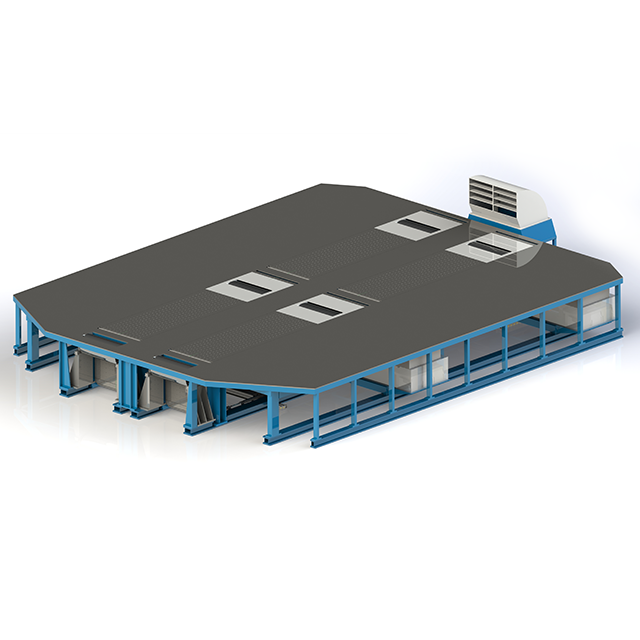
The rapid electrification of the automotive industry has fundamentally altered electromagnetic compatibility testing. High-voltage powertrains, complex battery management systems, and high-frequency inverters generate severe electromagnetic noise. Standard commercial testing chambers are insufficient for these applications. Automotive manufacturers must invest in specialized infrastructure capable of handling active loads, high currents, and extreme thermal outputs while maintaining absolute RF shielding integrity.
An EMC E-Axles Test Bench represents a significant engineering challenge. Electric axles combine the motor, inverter, and transmission into a single unit. Testing these assemblies requires routing high-voltage DC power into the shielded chamber without introducing external RF noise. This necessitates custom-designed, heavy-duty power line filters. The test bench must apply active mechanical loads to the e-axle to simulate real-world driving conditions. The mechanical coupling shafts must pass through the chamber walls using specialized waveguide penetrations to prevent electromagnetic leakage.
Integrating an automotive testing environment often requires an EMC Chassis Dynamometer System. Placing a dynamometer inside an anechoic chamber introduces severe structural and electromagnetic complications. The dynamometer itself contains massive electric motors and variable frequency drives that generate intense RF noise. This equipment must be heavily shielded and placed beneath the chamber's ground plane. Mechanical vibration isolation is equally important. Vibrations from a vehicle running at highway speeds on the dyno rollers can degrade the ferrite absorbers and misalign calibrated antennas. The dynamometer must also seamlessly integrate with the chamber's automated turntable to allow 360-degree testing of the vehicle.
For component-level evaluation, an EMC E-motor Test Bench focuses specifically on the electromagnetic emissions of the traction motor and its associated inverter. High-frequency switching inside the inverter generates sharp voltage transients. This creates broadband radiated and conducted emissions. The test bench must include advanced thermal management systems, such as liquid chillers, to keep the motor within operational temperature limits during continuous testing. Because these chillers contain pumps and compressors, they are typically located outside the chamber, requiring shielded fluid feedthroughs. Safety interlocks are mandatory. They ensure high-voltage power is immediately cut if the chamber doors open or if the software detects an anomaly.
The global wholesale market for testing equipment is segmented into distinct categories based on capability, frequency range, and compliance accreditation. Understanding these categories helps procurement teams align capital expenditure with actual engineering requirements. Over-specifying a system drains resources. Under-specifying leads to compliance failures and costly retrofits.
Entry-level systems are designed strictly for pre-compliance and troubleshooting. These setups typically include benchtop spectrum analyzers, near-field probe kits, Line Impedance Stabilization Networks (LISNs), and compact TEM cells. They do not require an anechoic chamber. These systems are ideal for startups, low-complexity consumer electronics developers, and agile engineering teams that need to perform quick iterative checks on PCB layouts. While they cannot provide official certification, they drastically reduce the likelihood of failing a final compliance test at an external lab.
Mid-range systems represent the standard for commercial full compliance. These packages include a fully constructed 3-meter Semi-Anechoic Chamber, a comprehensive suite of emission and immunity hardware, and automated control software. They are engineered to meet CISPR 16, EN 61000 series, and FCC Part 15 standards. Mid-market manufacturers producing white goods, standard IoT devices, and medical electronics rely on these systems to self-certify their products. Procurement in this tier requires careful evaluation of the chamber's shielding effectiveness guarantee and the bandwidth of the included amplifiers.
Advanced systems are bespoke installations designed for automotive, military, and aerospace applications. These setups feature 10-meter chambers, reverberation chambers, and specialized high-field-strength amplifiers capable of reaching high voltage per meter levels. They are built to satisfy rigorous standards like MIL-STD-461, DO-160, and CISPR 25. Procurement at this level involves extensive customization. You will need heavy-duty turntables, exhaust extraction systems for combustion engines, and integrated dynamometers. Tier 1 auto suppliers and defense contractors are the primary consumers of these advanced configurations.
Beyond the core hardware, procurement teams must account for hidden implementation factors. Facility preparation is a major undertaking. Installing a large chamber requires reinforced concrete flooring to support the structural steel and heavy DUTs. A dedicated, low-impedance grounding grid must be installed beneath the facility to ensure accurate measurements. Shipping massive steel panels and delicate antennas internationally requires specialized logistics. Site Acceptance Testing (SAT), Factory Acceptance Testing (FAT), and annual ISO 17025 calibration audits require ongoing resource allocation that must be factored into the lifecycle investment.
Selecting the right global manufacturer is as important as selecting the hardware itself. The supplier ecosystem is highly fragmented. Some vendors specialize in compact consumer electronics testing, while others focus entirely on heavy industrial and automotive integrations. Procurement teams must identify top-tier manufacturers based on their core competencies, engineering heritage, and proven track record of successful installations in the buyer's specific industry.
Regional market dynamics play a significant role in equipment sourcing. North American and European manufacturers generally lead the market in advanced automotive and aerospace integrations. They offer highly customized, turnkey solutions. However, these suppliers often have longer lead times. Manufacturers in the APAC region have rapidly expanded their capabilities. They offer highly competitive mid-range commercial systems with faster delivery schedules. When evaluating regional suppliers, buyers must assess the compatibility of the equipment with local power grids and the availability of regional technical support.
Vendor support and Service Level Agreements (SLAs) are vital for maintaining facility uptime. If a high-power amplifier fails or a receiver loses calibration, testing halts entirely. Procurement contracts must establish strict SLAs. Focus on guaranteed response times, the availability of local spare parts depots, and remote diagnostic capabilities. Top-tier suppliers offer secure remote access to the system's control software. Their engineers can troubleshoot configuration errors or software bugs without requiring an on-site visit. Ensure the vendor's software can export raw data in open formats like CSV or XML. This allows your engineering team to perform custom post-processing and integrate the test results directly into your internal Product Lifecycle Management systems.
Organizations must weigh the trade-offs between turnkey procurement and component sourcing. Hiring a single system integrator for a turnkey solution ensures that all components work seamlessly together. The integrator assumes full responsibility for the final Site Acceptance Testing. Conversely, piecing together components from multiple specialized wholesalers can reduce upfront capital expenditure. However, this approach shifts the integration risk entirely onto the buyer's engineering team. If the software fails to communicate with a third-party amplifier, resolving the issue becomes a complex logistical challenge between multiple vendors.
Integrating a complex electromagnetic testing facility into an existing building introduces significant engineering risks. The most critical failure point is facility shielding degradation. Even microscopic gaps in the chamber's RF-shielded doors, improperly sealed waveguide penetrations, or unshielded HVAC vents can allow external RF noise to contaminate test results. To mitigate this risk, procurement teams must mandate rigorous pre-installation site surveys. Once the chamber is erected, independent third-party shielding effectiveness testing must be conducted before any internal absorbers or testing equipment are installed.
Power line filters are essential components that prevent external electrical noise from entering the chamber through the main power supply. If these filters are improperly sized for the facility's current draw, they can saturate and lose their filtering capability, rendering the entire chamber ineffective. Supply chain and commissioning delays present another major risk. Custom chambers, specialized high-voltage filters, and high-power TWT amplifiers often have lead times stretching over several months. Delays in shipping or installation can derail entire product development schedules. To protect the organization, procurement contracts must be structured with phased payment milestones directly tied to successful Factory Acceptance Testing (FAT) and subsequent Site Acceptance Testing (SAT). Equipment should not be fully signed off until it demonstrates compliance with the required standards using the organization's actual products.
Obsolescence risk is a constant threat in high-frequency electronics. Purchasing a system strictly designed for today's standards may render the facility useless when next-generation protocols emerge. The shift toward 5G, 6G, and advanced automotive radar systems requires testing at increasingly higher frequencies. To mitigate obsolescence, organizations must prioritize modular systems. Chambers should be designed to accommodate future absorber upgrades. Software architectures must be open, and amplifier racks should have physical and electrical capacity for future expansion modules.
To successfully transition to an in-house testing model and maximize your capital investment, execute the following steps:
Conduct a comprehensive facility audit to map out available floor space, structural load limits, and existing grounding infrastructure before contacting suppliers.
Draft a highly specific Request for Proposal (RFP) that explicitly defines your required regulatory standards, payload capacities, and frequency ranges.
Require prospective vendors to provide documented case studies of similar installations within your specific industry sector.
Structure procurement contracts with phased payment milestones tied directly to successful Factory Acceptance Testing (FAT) and Site Acceptance Testing (SAT).
A: Commercial systems are categorized into pre-compliance and full compliance setups. Pre-compliance systems use benchtop equipment and near-field probes for early-stage troubleshooting. Full compliance systems require a 3-meter or 10-meter Semi-Anechoic Chamber, calibrated antennas, and automated software to officially certify products to standards like CISPR and FCC.
A: Radiated Emissions testing measures the unintentional electromagnetic noise generated by a product. Radiated Susceptibility testing blasts the product with controlled RF fields to ensure it continues operating correctly under electromagnetic stress. Both require different antennas and amplifier setups.
A: A standard motor test bench evaluates mechanical performance, torque, and efficiency. An EMC-specific test bench does this while operating inside a fully shielded anechoic chamber. It requires specialized high-voltage DC filtering, shielded waveguide penetrations for mechanical shafts, and strict RF noise suppression to ensure accurate electromagnetic measurements.
A: Retrofitting is highly complex and often impractical. Dynamometers require massive structural foundations, deep pits beneath the chamber, and specialized vibration isolation. The dynamometer's motors generate intense RF noise that must be heavily shielded. It is generally more effective to design a purpose-built chamber around the dynamometer.
A: Regulatory standards typically require products to be tested as used in their final operational state. A component tested in isolation may pass, but fail when connected to external power supplies, communication cables, or mechanical housings. The test system must be sized to accommodate the fully integrated setup.
A: Beyond the hardware, organizations must allocate resources for facility retrofitting, installing low-impedance grounding grids, shipping heavy steel panels, specialized installation labor, annual ISO 17025 calibration, and building dedicated product preparation infrastructure.


